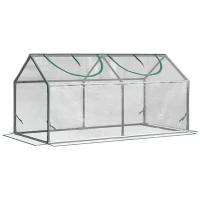
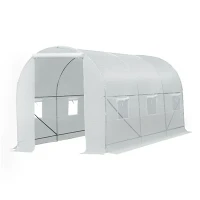
Hey there! As a supplier of small metal greenhouses, I've had my fair share of questions about how to control the carbon dioxide (CO2) level in these little spaces. It's a crucial aspect, 'cause the right CO2 levels can make a huge difference in the growth and health of the plants inside. So, let's dive into some practical ways to manage CO2 in a small metal greenhouse.
First off, why is CO2 so important? Well, plants use CO2 during photosynthesis to produce sugars and oxygen. More CO2 can often lead to increased plant growth, bigger yields, and better-quality produce. But too much or too little can mess things up.
Natural Ventilation
One of the simplest ways to control CO2 is through natural ventilation. You can open the doors and windows of your Mini Green House or Small Garden Greenhouse to let fresh air in. This fresh air brings in a steady supply of CO2 from the outside environment. On sunny days, when the plants are actively photosynthesizing and using up CO2, opening up the greenhouse can replenish the gas.
However, natural ventilation has its limitations. It depends on the weather outside. If it's too cold, you can't leave the vents open for long without risking the plants getting chilled. And in areas with low CO2 levels, like in big cities with lots of pollution, the incoming air might not have enough CO2 to really benefit the plants.
CO2 Generators
Another option is to use CO2 generators. These devices burn fuels like propane or natural gas to produce CO2. They're a popular choice for many greenhouse growers because they can quickly raise the CO2 levels in the greenhouse.

But there are some things to watch out for. You need to make sure the generator is properly installed and maintained. If it's not, it can produce harmful by - products like carbon monoxide, which is extremely dangerous for both the plants and anyone in the vicinity. Also, using fossil fuels has its environmental impact, so it's not the most eco - friendly option.
Compost and Manure
Compost and manure are great natural sources of CO2. When they decompose, they release CO2 into the air. You can place some compost or manure in containers inside your Mini Garden Greenhouse. As the microorganisms break down the organic matter, CO2 is gradually released.
The advantage of this method is that it's all natural and doesn't cost much. It also enriches the soil in the long run. But it's a bit of a slow process, and you need to be careful not to overdo it. Too much decomposing organic matter can create a smelly and unhygienic environment in the greenhouse.

Monitoring CO2 Levels
No matter which method you choose to control CO2, it's essential to monitor the levels. You can use CO2 sensors to keep track of the concentration of CO2 in the greenhouse. These sensors can be connected to a control system that can automatically adjust the CO2 input, like turning on a generator or opening the vents.
There are different types of CO2 sensors available, from simple and affordable ones to more advanced and accurate models. Investing in a good sensor is worth it, as it helps you maintain the optimal CO2 levels for your plants.
Photosynthesis and Plant Density
The number of plants in your greenhouse also affects the CO2 levels. More plants mean more photosynthesis, which means more CO2 is used up. If you have a high - density planting in your small metal greenhouse, you might need to supplement the CO2 more often.
On the other hand, if you have too few plants, the CO2 levels might build up too much, especially if you're using a CO2 generator. So, it's important to find the right balance between plant density and CO2 supply.
Watering and Humidity
Believe it or not, watering and humidity levels can also impact CO2 control. When you water the plants, the water evaporates, increasing the humidity in the greenhouse. High humidity can slow down the rate of photosynthesis, which in turn affects how much CO2 the plants use.

You need to maintain the right humidity levels in the greenhouse. If it's too high, you can use dehumidifiers. If it's too low, you can use humidifiers. By keeping the humidity in check, you can ensure that the plants are photosynthesizing efficiently and using the CO2 effectively.
Seasonal Considerations
The CO2 requirements of your plants can change with the seasons. In the winter, when the days are shorter and the light is weaker, the plants photosynthesize less and need less CO2. You might need to reduce the CO2 supply during this time.

In the summer, when the days are longer and the plants are growing vigorously, they need more CO2. You might need to increase the CO2 input, either by using a generator more often or by improving natural ventilation.
Conclusion
Controlling the CO2 level in a small metal greenhouse is a combination of different methods and careful monitoring. There's no one - size - fits - all solution, and you need to figure out what works best for your specific situation.
If you're interested in setting up a small metal greenhouse and want to learn more about CO2 control or any other aspect of greenhouse gardening, I'd love to have a chat with you. Whether you're a hobbyist looking for a Mini Green House or a small - scale farmer in need of a Small Garden Greenhouse, I can provide you with the right advice and products. Just reach out to me, and we can start a great conversation about your greenhouse needs.
References
- "Greenhouse Gardening Basics" by Jane Smith
- "The Science of Plant Growth in Greenhouses" by John Doe
- Online resources from agricultural extension services