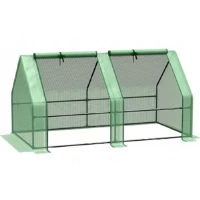
Polycarbonate greenhouses can generally maintain a certain level of warmth in winter, which is related to the thermal insulation performance of polycarbonate materials, greenhouse design and additional heating measures. The specific analysis is as follows:
Polycarbonate Material Properties
Thermal Insulation Performance: Polycarbonate has relatively good thermal insulation properties. It has a lower thermal conductivity compared to some other common greenhouse materials like glass. This means that it can slow down the heat transfer from the inside to the outside of the greenhouse, helping to retain heat. For example, multi-wall polycarbonate panels, which have air pockets between the layers, can provide even better insulation as the air acts as an additional barrier to heat loss.
UV Resistance and Heat Absorption: Polycarbonate can effectively block and absorb a portion of the ultraviolet rays in sunlight. When sunlight enters the greenhouse, the polycarbonate material absorbs and converts some of the light energy into heat, which contributes to increasing the temperature inside the greenhouse. Moreover, its ability to transmit light while absorbing heat helps to create a warmer environment compared to materials that simply transmit light without heat absorption.
Greenhouse Design Factors
Sealing Performance: A well-sealed polycarbonate greenhouse is crucial for heat retention. Good sealing around doors, windows, and other openings prevents cold air from entering and warm air from escaping. This can be achieved by using proper sealing strips and ensuring a tight fit of all components. For example, if the greenhouse has airtight doors and windows with rubber seals, it can significantly reduce heat loss.
Orientation and Shape: The orientation and shape of the greenhouse also affect its heat retention. A greenhouse oriented to maximize sunlight exposure, such as facing south in the northern hemisphere, can capture more solar energy during the day and store it as heat. Additionally, a dome-shaped or curved greenhouse design can have better heat distribution and retention compared to a flat-roofed structure, as it reduces heat loss at the corners and edges.
Additional Heating Measures
Use of Heating Equipment: In winter, additional heating equipment can be used in polycarbonate greenhouses to maintain a suitable temperature. Common heating methods include using electric heaters, gas heaters, or hot water heating systems. These heaters can supplement the heat provided by the sun and the insulation of the polycarbonate material, ensuring that the temperature inside the greenhouse remains warm enough for plant growth.
Insulation Accessories: The use of insulation accessories such as thermal curtains or blankets can further enhance the heat preservation effect. These can be installed inside the greenhouse and drawn at night or during extremely cold periods to provide an extra layer of insulation, reducing heat loss through radiation and convection.
However, it should be noted that in extremely cold regions or during severe winter conditions, the temperature inside a polycarbonate greenhouse may still drop significantly. In such cases, additional insulation and heating measures may be required to ensure the survival and growth of plants.