

Hey there, fellow plant enthusiasts! I'm a supplier of tunnel greenhouses, and I often get asked if a tunnel greenhouse can be used for growing succulents. Well, let's dive right into this topic and find out!

First off, let's talk a bit about succulents. These little guys are amazing! They're known for their ability to store water in their leaves, stems, or roots, which means they can survive in arid conditions. Think of cacti, which are a type of succulent. They've adapted to thrive in deserts where water is scarce. Succulents come in all shapes and sizes, from the tiny, delicate Echeveria to the large, spiky Agave.
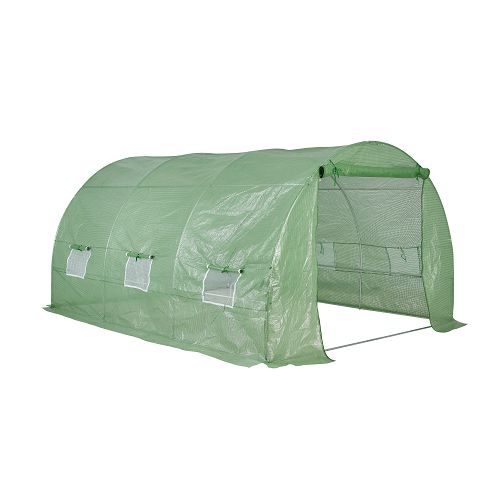
Now, let's look at tunnel greenhouses. A tunnel greenhouse, as the name suggests, is shaped like a tunnel. It's usually made of a metal or PVC frame covered with a plastic film. They're relatively easy to set up and can be a cost - effective option for both small - scale and large - scale growers.
One of the biggest advantages of using a tunnel greenhouse for succulents is temperature control. Succulents generally prefer warm temperatures, but they can be sensitive to extreme heat. In a tunnel greenhouse, you can regulate the temperature more easily. During the cold winter months, the greenhouse can act as a protective barrier against frost. For example, if you live in an area where temperatures drop below freezing at night, the tunnel greenhouse can keep your succulents warm. Check out this Backyard Greenhouse for Winter for more info on how to use a tunnel greenhouse in the colder seasons.
On the other hand, in the scorching summer, you can ventilate the greenhouse by opening the sides or using vents. This helps prevent the temperature inside from getting too high, which could damage your succulents.
Another important factor for succulents is light. These plants love sunlight, but too much direct sunlight can sometimes be harmful, especially during the peak of summer. A tunnel greenhouse allows you to control the amount of light your succulents receive. You can use shade cloths to reduce the intensity of sunlight when needed. For instance, if you notice that your succulents are starting to get sunburned, you can quickly put up a shade cloth to protect them.
Humidity is also a crucial aspect. Succulents prefer low - humidity environments. In a tunnel greenhouse, you can manage humidity levels better than in an open - air garden. By ensuring proper ventilation, you can prevent the build - up of moisture, which could lead to fungal diseases in succulents. For example, if it's been raining a lot outside, you can open the greenhouse to let the excess moisture escape.
Now, let's talk about the different types of tunnel greenhouses. There's the Insulated Greenhouse. This type is great for areas with extreme temperature variations. The insulation helps keep the temperature more stable inside the greenhouse, which is ideal for succulents. Whether it's freezing cold outside or swelteringly hot, the insulated greenhouse can provide a more consistent environment for your plants.
Then there's the Low Tunnel Greenhouse. It's a more budget - friendly option and is perfect for small - scale succulent growers or those with limited space. It's easy to set up and can still offer a good amount of protection for your plants.
When it comes to soil and containers in a tunnel greenhouse, you need to be careful. Succulents require well - draining soil. You can use a mix of potting soil, perlite, and sand to ensure good drainage. As for containers, make sure they have drainage holes at the bottom. This helps prevent water from pooling around the roots, which can cause root rot.
Watering is another key point. In a tunnel greenhouse, you need to be more precise with watering. Since the environment is more controlled, the soil may dry out at a different rate compared to an open - air garden. A good rule of thumb is to water your succulents only when the soil is completely dry. Over - watering is one of the most common mistakes when growing succulents, and a tunnel greenhouse can help you keep better track of the soil moisture.
Pest control is also easier in a tunnel greenhouse. You can create a more isolated environment for your succulents, which reduces the chances of pests like aphids, mealybugs, and spider mites infesting your plants. If you do notice pests, it's easier to treat them in a confined space like a greenhouse.
However, there are also some challenges when using a tunnel greenhouse for succulents. One of them is the initial cost of setting up the greenhouse. You need to invest in the frame, the plastic covering, and any additional equipment like vents or shade cloths. But in the long run, it can be worth it, especially if you're serious about growing succulents.
Another challenge is maintenance. You need to regularly check the greenhouse for any damage to the frame or the plastic covering. If there are holes or tears, it can affect the temperature and humidity control inside. Also, you need to clean the greenhouse periodically to prevent the build - up of dirt and debris.
In conclusion, a tunnel greenhouse can definitely be used for growing succulents. It offers many benefits in terms of temperature control, light management, humidity regulation, and pest control. Whether you're a beginner or an experienced succulent grower, a tunnel greenhouse can provide a great environment for your plants to thrive.
If you're interested in purchasing a tunnel greenhouse for your succulents or have any questions about our products, feel free to reach out. We're here to help you create the perfect growing environment for your beloved succulents.
References
- Smith, J. (2020). "Growing Succulents in Controlled Environments". Gardening Today Magazine.
- Johnson, A. (2021). "The Benefits of Tunnel Greenhouses for Plant Growth". Horticulture Journal.


