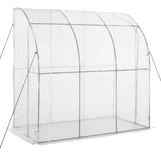
Hey there! I'm a supplier of high tunnel greenhouses, and I often get asked about the wind resistance requirements for these structures. In this blog post, I'll share some insights on what you need to consider when it comes to making sure your high tunnel greenhouse can stand up to the wind.
Why Wind Resistance Matters
First off, let's talk about why wind resistance is such a big deal for high tunnel greenhouses. These greenhouses are designed to provide a controlled environment for growing plants, but if they can't withstand strong winds, all that hard work can go up in smoke. High winds can damage the structure, tear the covering, and even uproot the entire greenhouse. This not only means a loss of your investment but also a setback for your growing season.
Factors Affecting Wind Resistance
There are several factors that can affect the wind resistance of a high tunnel greenhouse. Understanding these factors can help you make informed decisions when it comes to choosing the right greenhouse for your needs.
1. Design and Structure
The design of the high tunnel greenhouse plays a crucial role in its wind resistance. A well-designed greenhouse will have a strong frame that can distribute the forces of the wind evenly. For example, arched structures are generally more wind-resistant than rectangular ones because they can deflect the wind more effectively. The materials used in the frame also matter. Steel frames are typically stronger and more durable than aluminum or PVC frames, but they can also be more expensive.


2. Covering Material
The covering material of the greenhouse is another important factor. Different materials have different levels of strength and flexibility. Polyethylene film is a popular choice for high tunnel greenhouses because it's relatively inexpensive and easy to install. However, it may not be as strong as other materials like polycarbonate or fiberglass. When choosing a covering material, consider the wind conditions in your area and choose a material that can withstand the expected wind speeds.
3. Location and Installation
Where you place your high tunnel greenhouse and how you install it can also impact its wind resistance. Avoid placing the greenhouse in areas that are prone to high winds, such as on top of a hill or in a valley where wind can funnel. Make sure the greenhouse is properly anchored to the ground to prevent it from being blown away. This can be done using stakes, anchors, or a concrete foundation.
Wind Resistance Requirements
So, what are the wind resistance requirements for a high tunnel greenhouse? Well, it depends on where you live. Different regions have different wind load requirements based on the average wind speeds and the frequency of severe wind events.
In the United States, for example, the building codes specify different wind load requirements for different areas. The International Building Code (IBC) and the American Society of Civil Engineers (ASCE) standards provide guidelines for calculating the wind loads on structures, including high tunnel greenhouses. These calculations take into account factors such as the location, the height of the structure, and the shape of the roof.
In general, high tunnel greenhouses should be designed to withstand wind speeds of at least 70 to 90 miles per hour (113 to 145 kilometers per hour), depending on the region. However, in areas that are prone to hurricanes or tornadoes, the wind resistance requirements may be much higher.
Meeting the Requirements
As a high tunnel greenhouse supplier, I understand the importance of meeting the wind resistance requirements. That's why I offer a range of high-quality greenhouses that are designed and engineered to withstand strong winds.
Our High Tunnel Greenhouse models are made with strong steel frames that provide excellent structural integrity. The frames are coated to prevent rust and corrosion, ensuring long-term durability. We also offer a variety of covering materials, including high-strength polyethylene film and polycarbonate, to meet the specific needs of our customers.
In addition to providing high-quality products, we also offer professional installation services. Our team of experienced installers will make sure that your greenhouse is properly installed and anchored to the ground, so you can have peace of mind knowing that your investment is protected.
Tips for Improving Wind Resistance
Even if you have a high-quality greenhouse that meets the wind resistance requirements, there are still some things you can do to improve its performance in windy conditions.
1. Regular Maintenance
Regular maintenance is essential for keeping your greenhouse in good condition. Inspect the frame and covering regularly for any signs of damage, such as rust, cracks, or tears. Repair or replace any damaged parts as soon as possible to prevent further damage.
2. Reinforce the Structure
If you live in an area with particularly high winds, you may want to consider reinforcing the structure of your greenhouse. This can be done by adding additional supports or braces to the frame. Our team can provide you with advice on the best way to reinforce your greenhouse based on your specific needs.
3. Monitor the Weather
Keep an eye on the weather forecast, especially during periods of high wind. If a strong wind event is expected, take precautions to protect your greenhouse. This may include lowering the sides of the greenhouse, securing loose items, and removing any debris that could be blown into the structure.
Contact Us for Your High Tunnel Greenhouse Needs
If you're looking for a high-quality high tunnel greenhouse that can withstand the wind, look no further. As a trusted supplier, I'm committed to providing you with the best products and services. Whether you're a small-scale farmer or a large commercial grower, we have the right greenhouse solution for you.
Contact us today to discuss your requirements and get a free quote. Our team of experts will be happy to help you choose the right greenhouse for your needs and ensure that it's installed and maintained properly. Let's work together to create a successful growing environment that can stand up to the elements.
References
- International Building Code (IBC)
- American Society of Civil Engineers (ASCE) standards